One Mile, Two Millennia: A Self-Guided Emperor's Walk Through Ancient Rome
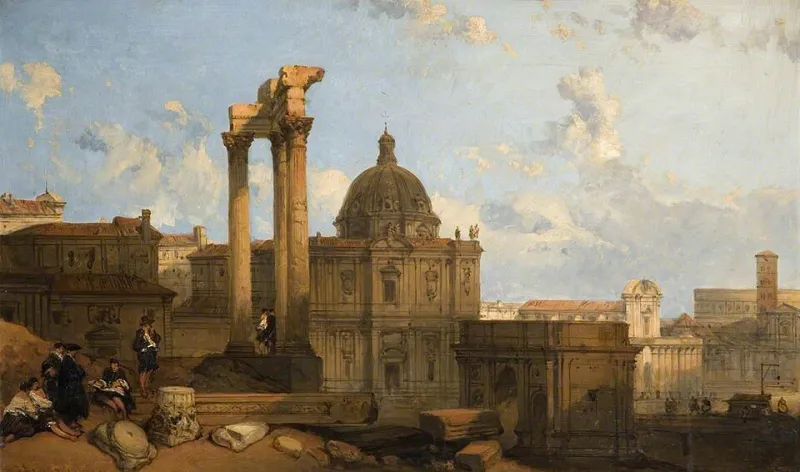
Photo: David Roberts, Public domain, via Wikimedia Commons
Here's the thing about Rome that no guidebook admits upfront: the greatest hits are all within about two miles of each other. You can walk a route that starts with Julius Caesar and ends with a pope's fortress, and you never need a bus, a taxi, or comfortable shoes you're willing to sacrifice. We call it the Emperor's Walk, and it's the itinerary we'd hand a first-timer who wants the ancient city without a history degree or a heat stroke.
Start Where the Empire Started: The Roman Forum
Buy your combined ticket (Colosseum, Forum, and Palatine Hill — about €18) and enter through the Via di San Gregorio side, which skips the worst of the Colosseum queue in the morning. The Forum is a ruined puzzle, so give it context: this was the downtown of the Western world for centuries. Stand at the Temple of Saturn and think of the empire's treasury living under those columns. Walk to the curved Temple of Venus and Roma, and remember that Julius Caesar's cremation happened in the Forum proper — a spot marked today by a humble pile of flowers left by visitors who, like us, find it a little staggering.
Practical notes: Budget 90 minutes. Bring water — the fountains inside the archaeological zone are drinkable and famously cold. In July, go at 8:30 a.m. or don't go at all.
Gelato Stop No. 1: Piazza del Colosseo
A five-minute walk from the Forum exit, the streets around the Colosseum are touristy — but there's no shame in grabbing a cone and sitting on the low wall opposite the Colosseum's flank. Yes, it's the most photographed ruin on Earth. Take the photo anyway. Your group chat requires it.
The Colosseum, Through an Emperor's Ego
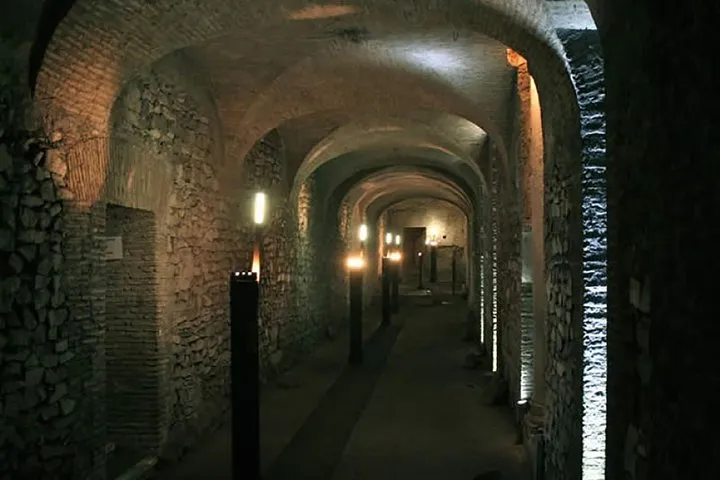
The Flavian Amphitheater was Vespasian's masterstroke of PR: build a stadium on the drained lake of the hated emperor Nero's palace, give the people their games, and watch your approval ratings soar. Inside, walk the full ring at arena level before climbing — the views of the hypogeum (the underground maze where gladiators and animals waited) are worth the stairs. If you want to go full American-history-nerd, book the arena floor or underground tour in advance; they sell out weeks ahead in high season.
Gelato Stop No. 2 and the Imperial Fora
Head up Via dei Fori Imperiali toward Piazza Venezia, passing the excavated Imperial Fora on your right. Trajan's Forum and Column — that spiral of carved marble telling the story of his Dacian wars like an ancient comic strip — is often breezed past by tour groups in a hurry. Slow down. Trajan was, by most ancient accounts, the best boss the empire ever had, and his column has stood here for 1,900 years without falling over.
Around the corner on Via delle Botteghe Oscure, Gelateria Pasticceria Bernardini (a local institution since 1942) is your reward. Order the zabaione and thank us later.
Capitoline Hill and Marcus Aurelius
Climb the Cordonata — the shallow stairway Michelangelo designed so horsemen could ride up it — to the Piazza del Campidoglio. Inside the Capitoline Museums (€15), you'll find the original bronze equestrian statue of Marcus Aurelius, the philosopher-emperor who wrote his Meditations while campaigning on the frontier. Americans love Marcus for the same reason the Stoicism podcast boom happened: the guy ran the world and still journaled about humility. The statue survived medieval destruction only because people mistook it for Constantine, Rome's first Christian emperor. Ancient mistaken identity saved a masterpiece.
Crossing the River: Hadrian's Tomb
From the Capitoline, it's a pleasant 20-minute walk down Via del Corso and across the Tiber to Castel Sant'Angelo. Hadrian — the emperor who built the wall across northern England and traveled his empire more than any of his predecessors — designed this as his family mausoleum. Later popes turned it into a fortress and built a secret escape corridor to the Vatican. For €16, you can climb through 1,900 years of history and end on a terrace with the best view of St. Peter's dome in the city.
The Long Game
The walk clocks in at roughly 2.5 miles, four to five hours with stops, and covers emperors from Julius Caesar through Marcus Aurelius — the first two millennia of a city that's now nearly three thousand years old. Wear the broken-in sneakers, refill your water bottle at every nasone (those cast-iron drinking fountains all over town), and remember: in Rome, the ruins aren't a detour from the city. They are the city, and they've been waiting for you since before anyone called anything an empire.