Beneath the Cobblestones: Where Rome Keeps Its Oldest Secrets
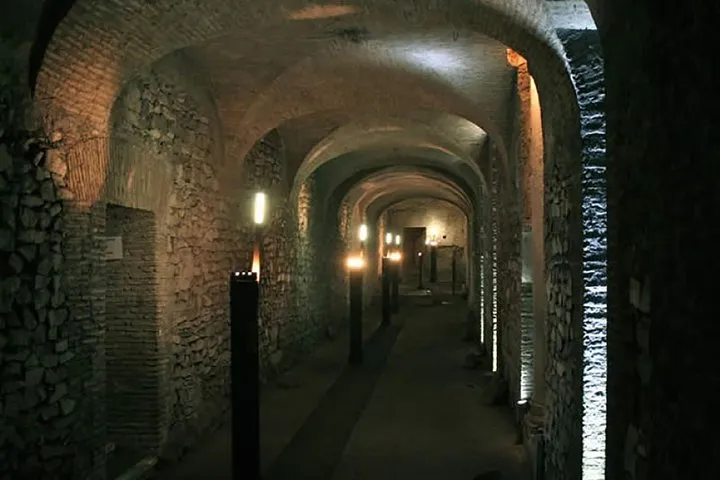
Photo: catacombs ancient tunnels underground Rome dim lighting, via media-cdn.tripadvisor.com
Here's the thing nobody tells you before your first trip to Rome: the city you walk through is only the top floor of the building. The Rome of the Caesars is down there, twenty feet under your sneakers, sealed off by centuries of flood silt, rubble, and plain old laziness about hauling debris away. Every time the Tiber flooded, another layer of mud settled. Every time a building came down, the ruins became foundation. Repeat for two millennia and you get a city where the modern street level floats way above the ancient one.
The good news for American travelers: you can go down and see it. Here are five spots worth rearranging your itinerary for.
San Clemente: The Time-Machine Basilica
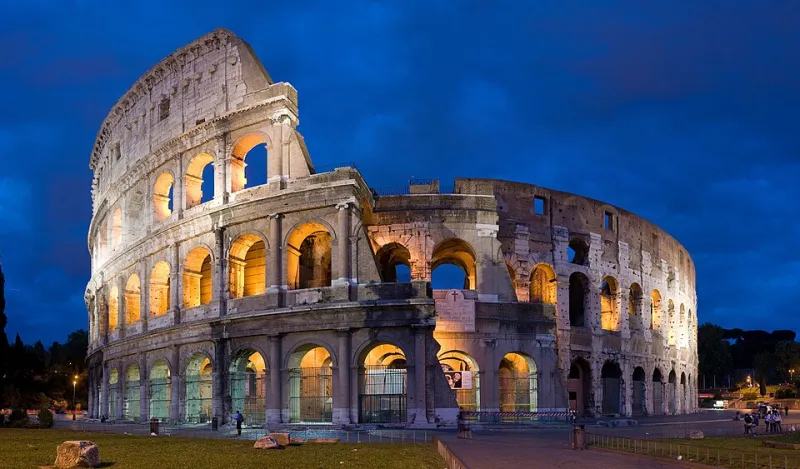
If you only visit one underground site, make it San Clemente, a short walk from the Colosseum. The setup is almost absurd: a 12th-century basilica sitting on top of a 4th-century church, which sits on top of a 1st-century Roman house and a Mithraeum — a temple to a mystery cult centered on a bull-slaying god. You descend two staircases and roughly eighteen centuries in about ten minutes. Down in the coolest level, you can hear (via a slightly goofy speaker setup) water rushing through an ancient drain that still connects to the Cloaca Maxima. Rome's original plumbing, still audibly doing its thing.
The Vicus Caprarium: The Trevi's Wet Basement
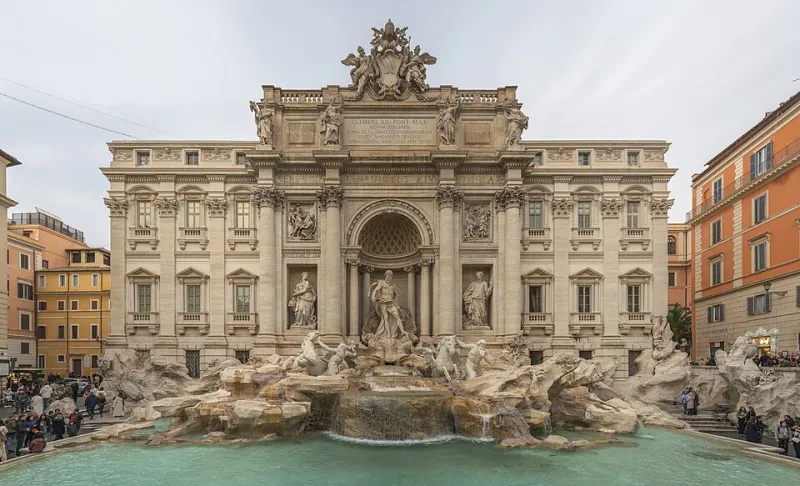
Most visitors to the Trevi Fountain never realize there's an archaeological site directly underneath it. The Vicus Caprarium — sometimes called the "Trevi underground" — preserves part of an ancient apartment block and a section of the Aqua Virgo, the aqueduct that still feeds the fountain today. Yes, the water splashing over those Baroque sculptures is technically the same supply system built by Agrippa in 19 BC. The visit takes about half an hour, it's cheap, and it's almost never crowded. Book ahead; slots are small.
The Catacombs of Domitilla: Rome's Oldest Neighborhood
Skip the more famous (and more crowded) catacombs on the Via Appia and head to Domitilla instead. This is one of the largest burial networks in Rome — nearly ten miles of tunnels on four levels, dug by the early Christian community between the 2nd and 4th centuries. Unlike some catacombs, Domitilla includes an actual underground basilica, and much of the decoration is original rather than 19th-century touch-ups. The guides are knowledgeable and the groups are small by necessity. Wear decent shoes; the passages are cool, a little damp, and occasionally narrow.
The Stadium of Domitian: Piazza Navona's Secret
Piazza Navona's elongated oval shape isn't a design choice — it's a footprint. The baroque piazza sits directly on top of the Stadium of Domitian, built around 86 AD for Greek-style athletics. Head to the Stadio di Domiziano underground site on the north end and you can stand in what was once the track itself, surrounded by the brick vaults where up to 30,000 spectators cheered. It's a five-minute detour from whatever espresso you were already planning to drink on the piazza, and it completely changes how you see the space above.
The Vincian Basilica: Rome's Strangest Underworld
Tucked near St. John Lateran, the Basilica Vinciana (associated with the ancient Porta Maggiore area) is the deep cut of this list — a subterranean Roman basilica from the 1st century, carved below street level and later wrapped in Christian legend. Access is limited and usually requires a scheduled small-group visit, which is exactly why it stays magical. If you're a second-time Rome visitor looking for something your cousin hasn't posted about, this is it.
How to Book Without Getting Scammed
A few ground rules from us to you:
- Book directly with official sites (San Clemente, Domitilla, and the Stadium of Domitian all take online reservations) or with licensed small-group operators. If a third-party site is charging triple the gate price, close the tab.
- Cap your group size at 10–12. Underground corridors physically can't handle big bus tours, and the ethical operators know it.
- Go in the morning or the off-season. Underground sites stay around 55–60°F year-round, so bring a light layer even in August — but shoulder-season weekdays mean you might share the catacombs with nobody.
- Photography rules vary. Some sites allow it, some don't. Ask first; the guides appreciate it.
Rome rewards travelers who look down as well as up. Two thousand years of history didn't get buried — it just moved downstairs.