Anita's Rome: Chasing the Ghost of La Dolce Vita Through the Streets of 2020s Rome
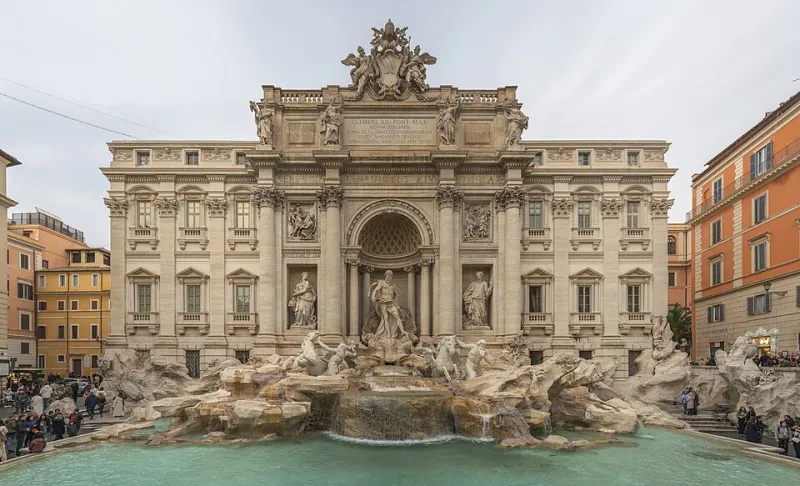
Photo: Wilfredor, CC0, via Wikimedia Commons
There's a moment in La Dolce Vita that every film lover carries with them: Anita Ekberg, in a black evening gown, wading into the Trevi Fountain at midnight, calling to Marcello Mastroianni like a siren of the space age. When Federico Fellini shot that scene in the spring of 1959, he needed special permission from the city — and Ekberg famously waded in barefoot while the crew watched in awe.
The film premiered in 1960 and promptly scandalized half of Italy while making Rome the most romantic backdrop in movie history. More than sixty years later, the city Fellini filmed is still here — if you know where to look. We walked the route so you don't have to squint at old film stills on your phone.
Via Veneto: The Boulevard of Beautiful Ruin
Start where the film itself starts, more or less: Via Vittorio Veneto, the broad, elegant avenue near the Barberini metro stop that served as the movie's beating heart. In 1960, its café terraces were the absolute center of gravity for actors, directors, paparazzi, and hangers-on — the exact world Marcello drifts through as a celebrity gossip columnist.
Then: The Café de Paris and Café Rosati hosted the entire jet set. Fellini held court at a corner table; anyone who was anyone paraded past the outdoor chairs just to be seen.
Now: The cafés are still there — Rosati and Stravinsky occupy the same corners — but the paparazzi have moved on and the crowd is mostly tourists and well-heeled locals. It's calmer now, honestly. Sit outside with a cappuccino, order the way Romans do (quickly, standing at the counter if you want it cheap), and imagine the flashbulbs. The Harry's Bar on Via Vittorio Veneto is a fitting stop too — a nod to Dolce Vita's spiritual cousin, La Dolce Vita's Roman nightlife, and yes, the Bellini was invented at the Venice original.
Eat nearby: For lunch, drop down to the Museo Nazionale Romano at Palazzo Massimo area or backtrack toward Barberini for trattorias like Settembrini 18 in the Flaminio-adjacent streets. Or do what the film's characters would do: make lunch last three hours.
The Trevi Fountain: Cinema's Greatest Swim
The fountain itself is unchanged — a Baroque avalanche of travertine that took Nicola Salvi decades to complete in the 1700s. What's changed is everything around it. In 1960, you could imagine a quiet midnight. Today, the piazza is packed shoulder-to-shoulder nearly all day, and the city now enforces rules: sitting on the fountain edge is banned, and the famous swim would land you a very expensive fine.
Our advice: go at dawn. Around 6 a.m., before the crowds and even before most of the cafés open, you can have the fountain nearly to yourself — the closest you'll ever get to Sylvia's version of Rome. Bring your own espresso from a bar on Via delle Muratte and pretend.
Nearby: Antico Caffè Greco-style old-school cafés are elsewhere, but on this side of town try Sant'Eustachio Il Caffè, a ten-minute walk away, for arguably the city's most famous coffee.
The Church and the Party: Santa Maria in Montesanto
One of the film's sharpest scenes cuts between Marcello escorting a movie star into a church on the Piazza del Popolo and the wild party happening outside. That church — Santa Maria in Montesanto, one of the twin churches framing the piazza — still stands at the top of Via del Corso.
Piazza del Popolo itself has been pedestrianized and polished, but the geometry Fellini shot is intact: the obelisk, the twin domes, the steps up to the Pincio terrace, where the view over Rome hasn't changed in centuries. Climb up at sunset. The dome of St. Peter's catches the last light exactly as it does in the film's opening helicopter shot.
Where Marcello Lived: The EUR District and Beyond
Fellini didn't just shoot the postcard Rome. The film's famous opening and closing scenes were shot in EUR, Mussolini's stark modernist district south of the center — all white stone and empty plazas, the perfect visual for Marcello's spiritual emptiness. Take Metro Line B all the way down and stand in the same plaza where the film opens with a statue of Christ dangling from a helicopter. It's a quick trip and a genuinely eerie, fascinating slice of Rome most tourists never see.
Staying in the Frame
Want to sleep inside the fantasy? The Hotel Excelsior on Via Veneto opened in 1906 and has hosted everyone from Fellini's cast to half of Hollywood. Rooms aren't cheap, but the lobby alone is worth a slow walk-through. For something more modest, the Monti and Trastevere neighborhoods put you close to the action at a fraction of the price.
Where to eat like the crew: Fellini famously loved long dinners. Near the Trevi, Il Chianti serves proper Roman food in a cellar setting; near Piazza del Popolo, Dal Bolognese on the square itself is old-school and glamorous in exactly the right way — order the tagliatelle.
The Sweet Life, Still
Here's the thing about La Dolce Vita: Fellini's Rome was a city of beautiful people drifting through beautiful nights, searching for meaning and mostly finding parties. Modern Rome — with its tourist crowds, its gelato lines, its selfie sticks — is a different animal. And yet. Stand at the Trevi at dawn, or at the top of the Spanish Steps as the evening bells ring, and the feeling the film captured comes flooding back. The sweet life isn't a snapshot from 1960. It's still being served, one espresso at a time.
Bring a black dress, if you've got one. You won't swim — but you'll want to.