Turn On the Tap, Skip the Tab: Why Rome's Street Fountains Beat Any Bottled Water in Europe
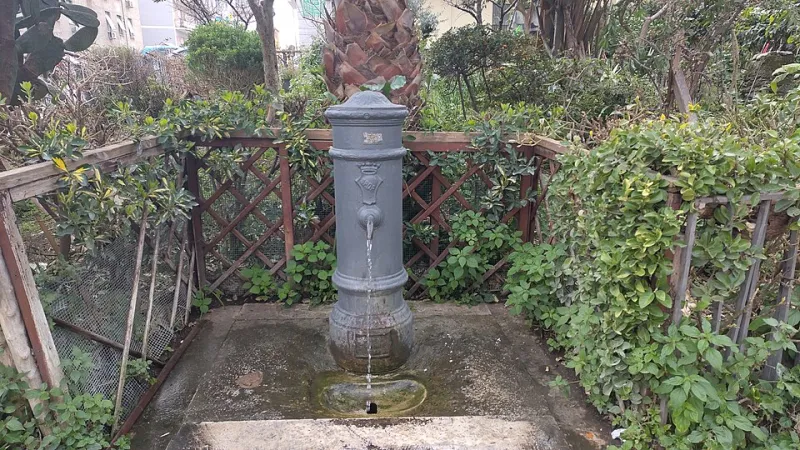
Photo: Guretto, CC0, via Wikimedia Commons
There's a moment that happens to nearly every American first-timer in Rome. It's 90 degrees out, the Colosseum is shimmering in the heat, and you're standing in line at a corner tabacchi behind three other sweating tourists, about to pay €3 for a small bottle of water that would cost a dollar back home.
Here's the thing: you've been standing twenty feet from free, cold, genuinely excellent drinking water this entire time. It's coming out of a slightly odd-looking cast-iron fixture on the sidewalk, and yes, you're supposed to drink from it. Romans have been doing it for generations.
What Exactly Is a Nasone?
The locals call them nasoni — "big noses" — thanks to the curved metal spout that arcs water into a steady stream. Nobody's entirely sure how many exist, but the commonly cited figure is somewhere north of 2,500 scattered across the city, and the water runs 24/7, year-round, at no charge.
The water itself is no garden hose runoff. Most of it travels from mountain springs outside the city — the Peschiera and Marcio aqueduct systems — through infrastructure that traces its lineage back to the original Roman aqueducts. Rome has essentially never stopped doing what it was built to do: move clean water over long distances and hand it to anyone who wants it. By the time it reaches a fountain near the Pantheon, it's cold, mineral-rich, and tested constantly by the city's utility company, ACEA.
For the record: it's safe. It's monitored more rigorously than most bottled water. The EPA would give it a gold star.
The Drinking Trick Every Tourist Should Learn
The classic nasone has one feature that separates the savvy from the thirsty: if you plug the end of the spout with your thumb or palm, water jets upward out of a small hole at the top of the curve, creating a tidy drinking fountain arc. It's the Roman version of a water fountain, just elegantly engineered in 1874 and still on duty.
A few practical notes before you set out:
- Bring a bottle to refill. Reusable bottles are perfectly acceptable — refill freely and often. In a pinch, a wine bottle works too (very Roman).
- Summer fountains run cold. Some nasoni, particularly in the historic center, are fed so deep underground that the water comes out refrigerator-cold even in August.
- Look for the special ones. A handful of fountains are works of art in their own right, and some of the oldest are worth planning a walk around.
A Neighborhood-by-Neighborhood Fountain Crawl
You could build an entire afternoon around Rome's most storied nasoni, and honestly, it pairs beautifully with a gelato stop or two.
Centro Storico: Start near Piazza Navona, where the Baroque showpieces — Bernini's Fountain of the Four Rivers and friends — dominate the square. The humble drinking fountains tucked along the surrounding lanes deliver the same mountain water without the crowds. Then wander toward Piazza Farnese, where two ancient granite bathtubs (hauled in from the Baths of Caracalla) have served as fountains since the 1500s.
Centro's quiet corners: The fountain at Piazza Santa Maria in Trastevere is one of the oldest in the city, with roots in the eighth century. Cross the river and you'll find the Trastevere versions of the classic nasone everywhere — plus the neighborhood's evening passeggiata, which pairs well with a full water bottle.
The grand dames: In front of St. Peter's, the Maderno fountain has been flowing since 1614. Down at the foot of the Spanish Steps, the Barcaccia — Bernini's half-sunken boat — was designed with low basins specifically so pack animals could drink. It's currently one of the city's most beloved (and most photographed) fountains, so admire it, then find the working nasone a few steps away.
The showstopper: Yes, the Trevi Fountain is a drinking fountain in the loosest ancestral sense — it marks the terminus of the Acqua Vergine, an aqueduct from 19 B.C. Don't drink from the Trevi (please), but know that the same pristine aqueduct water feeding it is what's coming out of the unassuming spout around the corner.
Summer Survival, Roman Style
June through August in Rome is no joke — think Washington, D.C. humidity with more cobblestones. The nasoni turn a brutal sightseeing day into a manageable one:
- Refill at every fountain you pass. It's free; the supply is infinite. There's no reason to ever be thirsty.
- Time your big sights for morning. Then do what Romans do: slow down after lunch, find some shade, and rehydrate at leisure.
- Skip the €3 bottle entirely. Over a week, a family of four easily burns through $80–100 on bottled water in Rome. That's a nice dinner. Or two.
- When in doubt, follow the locals. Roman joggers, dog walkers, and delivery drivers all drink from nasoni without a second thought. That's your green light.
Two Thousand Years of Free Refills
There's something quietly moving about it, once you think about it. The emperors built aqueducts to win public favor; the popes restored them to announce their power; the modern city just... kept the water running. Every nasone is the last link in a chain that stretches back past the Colosseum, past the Forum, all the way to 312 B.C., when Rome built its first aqueduct.
So on your next trip, do yourself a favor: pack one bottle, learn the thumb trick, and drink like you've lived here for two millennia. Your wallet — and the Mediterranean — will thank you.