Termini Is Your Ticket Out: Rome's Best Rail Day Trips, Mapped and Timed
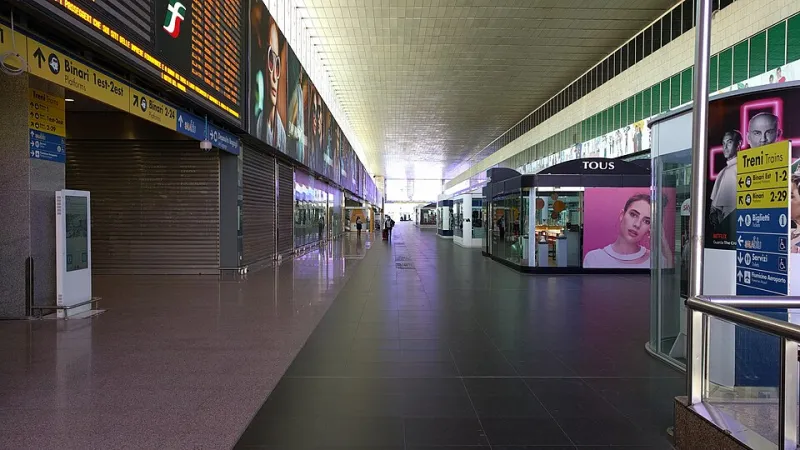
Photo: Luca Lindholm, CC BY-SA 2.0, via Wikimedia Commons
Rome has a way of convincing you it's the only city that matters. Then you stand under the giant steel canopy of Stazione Termini, clutching a €12 ticket, and realize the whole peninsula is waiting on the departures board.
Most American visitors hear "day trip from Rome" and picture a rental car, a GPS argument, and a Zona Traffico Limitato fine arriving by mail six months later. Forget all that. Rome sits at the crossroads of Italy's high-speed and regional rail networks, and Termini — huge, chaotic, and weirdly easy once you get the hang of it — is the front door to four of the best escapes in the country.
First, the Termini Survival Guide
Termini is not Grand Central. It's more like a mid-1990s shopping mall that happens to have 30-odd platforms attached. A few things to know before you go:
- Buy tickets before you arrive. Use the Trenitalia or Italo apps (both have English versions) or a ticket machine. Paper tickets from the machines must be validated in the little green machines on the platform — a fine for an unvalidated ticket is real and so is the fine.
- Arrive 20 minutes early, not 5. Finding your binario (platform) can involve escalators, crowds, and a light jog.
- High-speed vs. regional: Frecciarossa and Italo trains are fast, reserved, and comfy. Regional trains are slower, cheaper, and you can't miss the seat reservation because there isn't one. For day trips, both work — just know which you booked.
- Coffee strategy: There's a decent espresso bar near the main concourse. Get one. The train will be better for it.
Orvieto: The Easiest Wow of Your Life
Travel time: about 1 hour, 10 minutes on the regional line toward Florence.
Orvieto is the day trip I recommend to every first-timer who says, "But I don't want to waste Rome time." The train drops you at the base of the volcanic cliff, and a funicular — a genuine, rickety-in-a-charming-way funicular — hauls you up to a hill town crowned by one of Italy's most jaw-dropping cathedrals. The golden mosaic facade of the Duomo alone is worth the ticket price.
Add the underground tour (the city is honeycombed with Etruscan caves) and a long lunch, and you've had a full Italian day with zero driving and minimal planning. Return trains run regularly into the evening, but check the last departure — the cliff is less romantic when you're stuck below it.
Assisi: A Pilgrimage That Fits Between Breakfast and Dinner
Travel time: roughly 1 hour, 45 minutes with a change in Foligno, or direct on select trains.
The town of St. Francis clings to a hillside in Umbria, and the two-level Basilica is one of the most moving art experiences in Italy — Giotto's frescoes stacked on top of a crypt that draws genuine pilgrims, not just tourists. Assisi rewards slow walkers: the Rocca Maggiore fortress at the top gives you views over the Umbrian valley that will recalibrate your camera roll.
This is the trip where the schedule matters most, so book the return leg with a buffer. If you miss a connection in Foligno, the next train is usually less than an hour away — not a disaster, just an excuse for another espresso.
Florence: Yes, It's Doable in a Day
Travel time: 1 hour, 30 minutes on the high-speed Frecciarossa or Italo.
Purists will say Florence deserves an overnight, and they're right — but a well-run day trip beats skipping it entirely. Book the early train (around 7 a.m.), arrive by 8:45, and you can see the Duomo complex, cross the Ponte Vecchio, eat a proper lunch, and be back in Rome for dinner reservations.
Two American-specific tips: book high-speed tickets a week or more ahead for fares that can drop under €20 each way, and don't try to cram in the Uffizi without a timed reservation. The museum line is the one line in Italy that makes the Vatican look organized.
Naples: Controlled Chaos, One Hour Away
Travel time: about 1 hour, 10 minutes on the high-speed line.
Naples is the day trip with the highest risk-to-reward ratio on this list. The reward: the best pizza on Earth, the wild energy of Spaccanapoli, and the archaeological museum that holds most of Pompeii's greatest treasures. The risk: it's loud, it's intense, and it will not apologize for any of it.
Keep your itinerary tight — pizza lunch, a walk through the historic center, the museum if you have energy — and keep valuables in a front pocket, same rules as any big American city. If you want Pompeii itself, stay on the Circumvesuviana from Naples' Garibaldi station, but know that's a full-day commitment, not a bonus stop.
The Honest Timing Reality Check
Here's what a realistic day looks like: leave Termini by 8 a.m., arrive at your destination mid-morning, and budget a solid 5–6 hours on the ground. Anything less and you're paying for a train ride, not a trip.
And a gentle nudge: don't stack two destinations in one day. Orvieto and Assisi are not "close enough" to combine, no matter what your cousin's itinerary spreadsheet says. One town, done well, will beat two towns done in a panic.
Why the Train Wins Every Time
No parking nightmares. No Italian highway etiquette to master. No rental car sitting idle in a Roman garage while you pay for the privilege. Just a departures board, a platform number, and the strange pleasure of watching the Roman countryside unroll outside your window.
Termini isn't just where your Roman holiday ends. It's where the rest of Italy begins.