Standing Room Only: A Field Guide to Drinking Coffee Like You've Lived Here a While
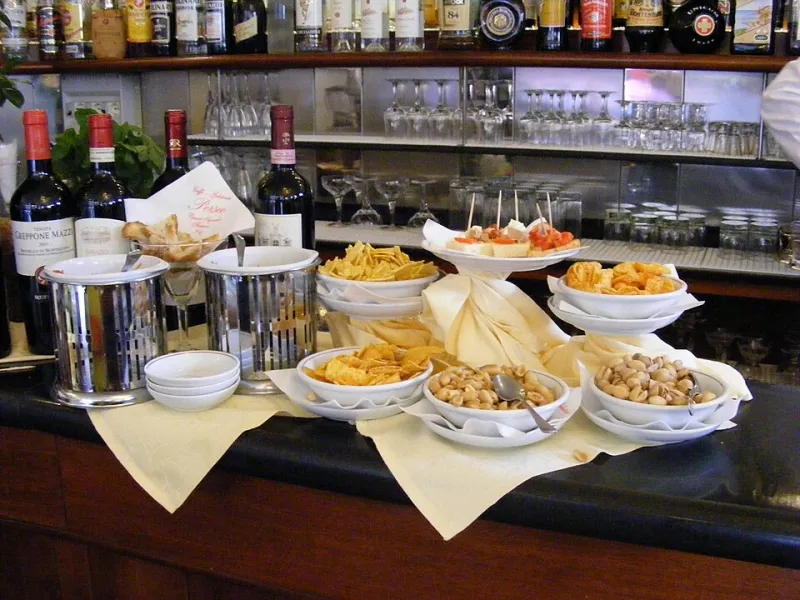
Photo: User:Mattes, Public domain, via Wikimedia Commons
There's a moment every American traveler in Rome knows well. You walk into a bar — which, surprise, is a coffee shop — clutching a twenty, and order a 'large latte to go.' The barista doesn't blink. The regulars behind you do. You've just committed about four small violations in one sentence, and you don't even know which ones.
Good news: the rules are few, they're old, and they're easy to learn before your first morning. Consider this your pre-flight briefing.
Pay First, Always
In most Roman bars, coffee is a two-step transaction. You go to the register — the cassa — tell them what you want, pay, and take your receipt (scontrino) to the counter. Then you hand the receipt to the barista and get your drink.
Some smaller spots, especially in the center, will let you pay the barista directly. If you're not sure, look at what the locals do. Nobody's going to arrest you for getting it wrong, but the cassa-first system is the default, and knowing it makes everything smoother — especially during the 8 a.m. rush, when the line behind you has opinions.
Sit Down, Pay Double
Here's the economics lesson nobody gives you: the price printed on the menu is the counter price. The same espresso that costs about a euro and change at the bar can run two or three times that at a table, because table service is a whole job — someone has to come out, take your order, and haul the tray back.
Neither option is wrong. Sitting at a little table on a sunny piazza is one of Rome's genuine pleasures, and you should absolutely pay for it now and then. But if you want the authentic, fast, cheap version, you drink standing up, elbow to elbow with commuters. One sip. Maybe two. Gone.
The Cappuccino Deadline (It's Soft, But It's Real)
The famous rule: no cappuccino after 11 a.m. Romans consider milk-heavy coffee a breakfast item — something to pair with a cornetto, not something you drink after a meal. Ordering a cappuccino at 3 p.m. won't get you thrown out, but it will get you identified as a tourist faster than a fanny pack.
The post-meal coffee is an espresso — or just caffè, since that's the default. It's small, it's intense, and it's believed to aid digestion. Whether that's science or folklore, adopt the ritual anyway. It works.
A Quick Decoder Ring
The menu at a Roman bar is short, and every word means something specific:
- Caffè — espresso. The house default.
- Caffè macchiato — espresso 'stained' with a dot of milk. Your afternoon compromise.
- Cappuccino — the morning heavyweight. Before noon, ideally.
- Caffè latte — mostly milk, a little coffee. Note: if you order a 'latte,' you will receive a glass of cold milk. Say the whole name.
- Caffè americano — espresso with hot water added. This exists for you, American. No judgment. (Some.)
- Caffè corretto — espresso 'corrected' with a shot of grappa or sambuca. Usually an old man's drink. Occasionally exactly what your vacation requires.
- Caffè shakerato — espresso shaken with ice into something like a martini of coffee. A summer revelation.
And 'to go'? It barely exists. Romans drink their coffee in three minutes at the counter. Cups to go are increasingly available in tourist-heavy zones, but the whole culture is built around the pause — the two minutes of standing still in a day.
About That Sospeso Thing
You may have heard of the caffè sospeso — the 'suspended coffee,' where you pay for two and the second goes to whoever needs it next. It's a beautiful tradition, but fair warning: it's Neapolitan. It originated in Naples' working-class cafes, and while a few Roman bars have adopted it in spirit, you won't find it as standard practice here. If a bar near the Pantheon advertises sospesi, great — participate. Just don't expect it to be a Roman ritual, and don't quiz the barista about it.
Your First Morning, Step by Step
- Find a bar with a few locals at the counter. If the espresso machine is hissing, you're in the right place.
- Walk to the register. Say 'un caffè, per favore.' Pay. Take the receipt.
- Claim a spot at the counter. Hand over the receipt.
- Sip. It's two ounces. You'll survive.
- Leave a small coin or two if you're feeling generous — it's appreciated, never expected.
That's it. Total cost: less than what you'd tip at home. Total time: four minutes. And somewhere around day three, you'll catch yourself doing it without thinking — receipt in hand, shoulder against the marble, watching the city go by at espresso speed.
At that point, congratulations: you're not fooling anyone, but you've stopped trying. And in Rome, that's usually when the city starts being nice to you.